Understand. Anticipate. Sleep with confidence.
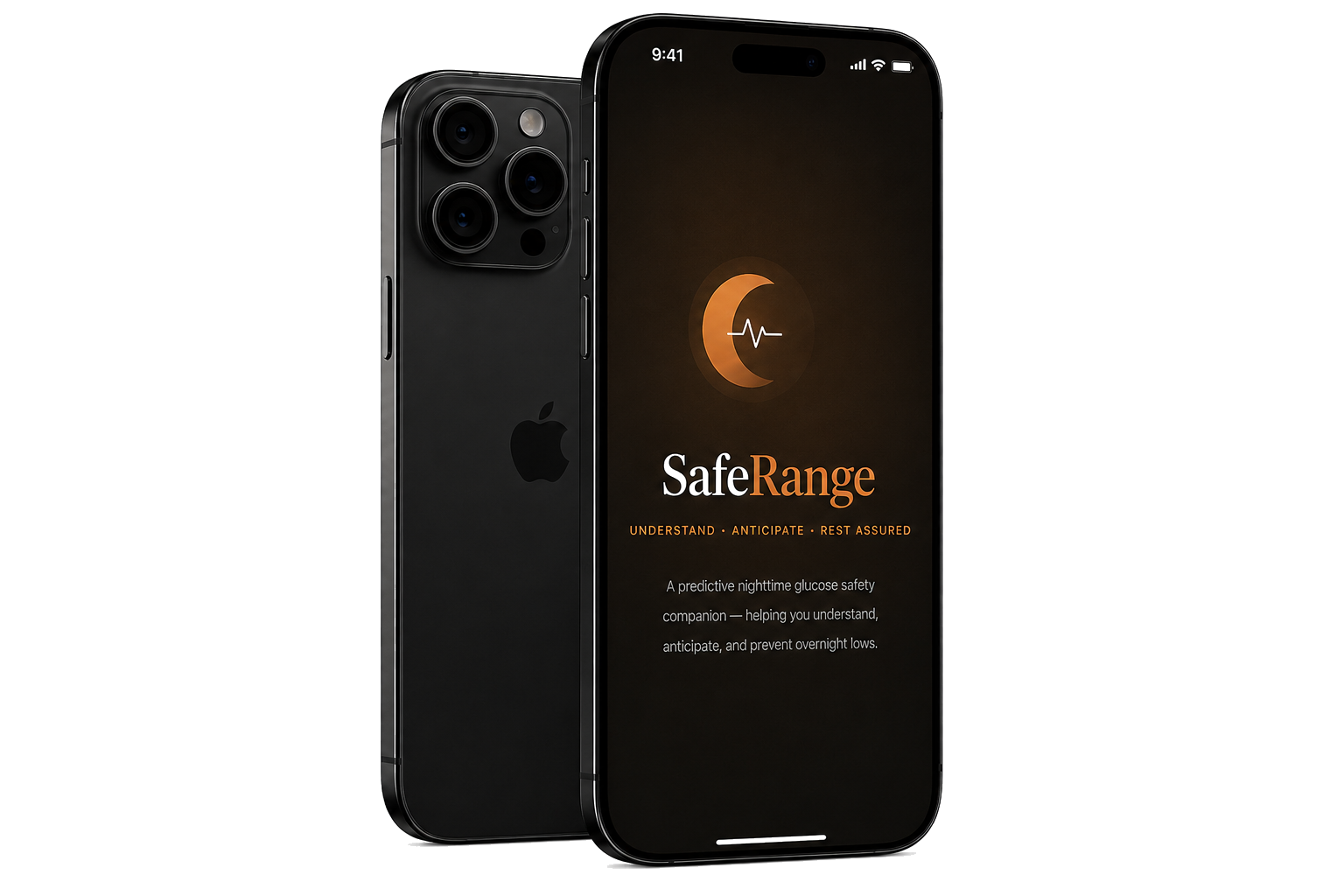
SafeRange is a predictive nighttime glucose safety companion that helps people understand, anticipate, and prevent overnight lows through personalized insights, pattern recognition, and explainable intelligence.
People living with diabetes already have access to numbers, charts, and alerts. Yet overnight remains one of the most uncertain moments of the day.
Research participants described checking glucose before bed, setting alarms, and worrying about sleeping through a low blood sugar event. The challenge was not simply access to information. It was confidence, understanding, and the ability to anticipate what might happen next.
SafeRange explores how predictive insights, pattern recognition, and explainable intelligence could help people feel more informed, prepared, and in control.
Even with similar habits, glucose responses can stay unpredictable. Across community discussions, the same emotional pain points appeared again and again.
I saw this as I was treating a middle of the night low.
Community member, diabetes forumI've been type 1 for 25 years. I've been through it all and I'm exhausted.
Community member, diabetes forumIt's more than a full-time job.
Community member, diabetes forumTo understand the problem space, I ran qualitative research, community observation, social listening, and thematic analysis, documenting recurring concerns and unmet needs.
Understand how people living with diabetes experience uncertainty, decision-making, and overnight glucose management beyond what traditional tracking tools capture.
Define the space and surface the assumptions worth testing.
Social listening across lived diabetes conversations.
Cluster recurring signals into meaningful themes.
Turn themes into product principles and direction.
Shape a high-fidelity mobile-first product concept.
Reviewing conversations and comments shared by people living with diabetes.
Observing recurring concerns, frustrations, and unmet needs in context.
Clustering observations into the patterns that shaped product direction.
Dozens of recurring observations were synthesized into four findings. Each one paired what participants experienced with the evidence behind it and the product decision it set in motion.
Overnight lows create anxiety.
Participants frequently described checking glucose before bed, setting alarms, and worrying about sleeping through a low.
Introduce a Sleep Safety Score that communicates overnight risk in a simpler and more actionable way.
Management is relentless and mentally taxing.
People described continuous decisions about food, exercise, medication, insulin, sleep, and stress, every single day.
Build a personalized learning engine that adapts to each person so guidance grows more relevant over time.
Years of self-management lead to fatigue.
Many described feeling overwhelmed, emotionally drained, and stretched between diabetes and everyday life.
Reduce cognitive load by leading with one clear answer instead of more charts to interpret.
People want to know why, not only what.
Most tools track numbers, yet users wanted to understand what triggered an event and whether it might happen again.
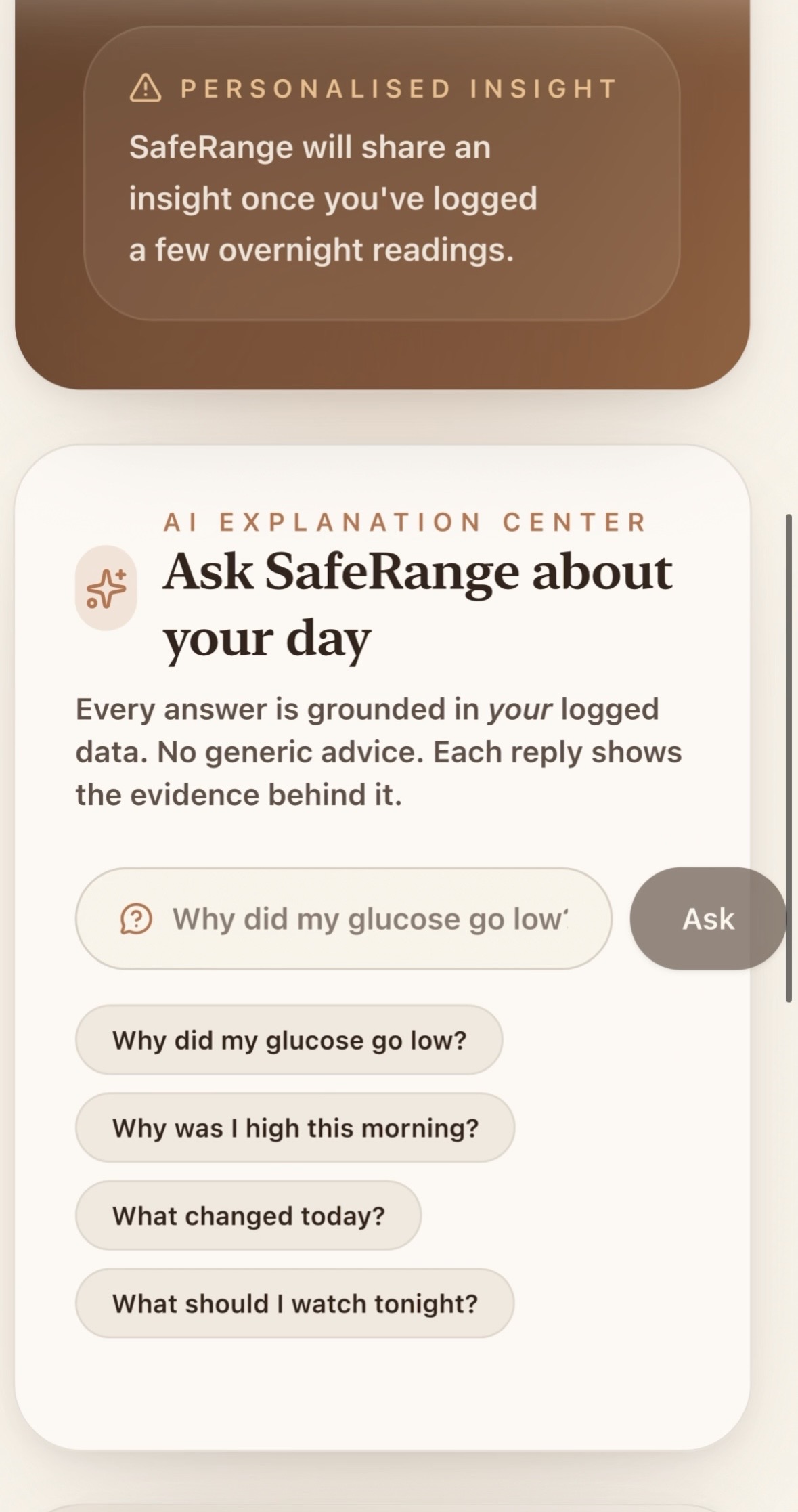
Create an AI Explanation Center that turns each person's own data into plain-language understanding.
Research only matters when it changes decisions. Each key finding directly informed a product principle, creating a clear line between what participants experienced and how SafeRange was designed to respond.
People needed better glucose tracking.
People needed better understanding.
An explainable health intelligence platform focused on helping users understand patterns, anticipate risks, and make more confident decisions.
The research revealed that uncertainty, not data scarcity, was the deeper challenge. This shifted the focus from tracking information to helping people understand it.
The objective wasn't to criticize existing solutions. In many ways, today's diabetes platforms are incredibly effective at collecting and displaying health data. The opportunity emerged elsewhere. Most products help users understand what happened. Few help them understand why it happened, what influenced it, and what to do next. That gap became the foundation of SafeRange.
Data collection is no longer the challenge. Transforming data into understanding is.
| Platform | Primary focus | Strengths | Gap identified |
|---|---|---|---|
| Dexcom | Continuous glucose monitoring | Real-time visibility & alerts | Monitors rather than explains why events occur |
| FreeStyle Libre | Glucose monitoring | Easy trends & history | Leaves users to interpret patterns alone |
| mySugr | Diabetes management | Logging & reporting tools | Limited personalized pattern discovery |
| Levels | Metabolic insights | Visualization & lifestyle feedback | Built for optimization, not overnight risk |
| SafeRange | Explainable overnight understanding | Personalized patterns & plain-language “why” | The opportunity: turning data into understanding |
Research consistently revealed that confidence does not come from seeing more information. Confidence comes from understanding patterns, anticipating outcomes, and knowing what actions to take next. These principles became the strategic foundation of SafeRange.
Help users understand causes, patterns, and context, not just numbers.
Adapt insights to individual behaviour rather than relying on generic assumptions.
Surface meaningful patterns before they become problems.
Explain recommendations clearly and communicate confidence levels honestly.
Every interaction is designed to reduce uncertainty, increase understanding, and build confidence over time.
SafeRange combines personalization, overnight risk awareness, and explainable insights into a unified experience designed to help people better understand their health and make more informed decisions.
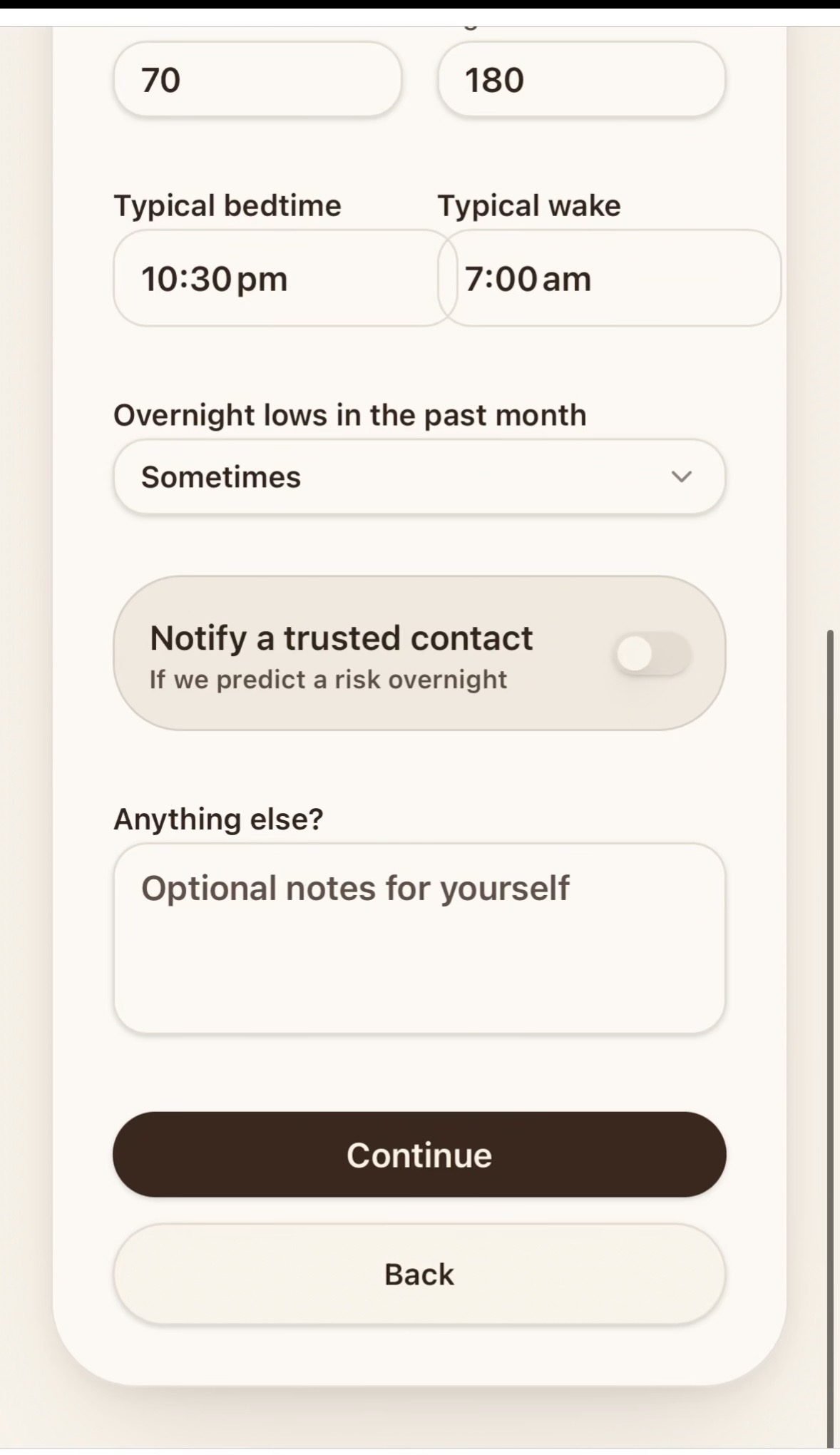
SafeRange cannot explain patterns without first understanding the person behind the data. Rather than treating onboarding as a generic setup flow, the experience gathers the context needed to personalize risk awareness, identify recurring behaviors, and generate explanations that are relevant to each individual's routine.
Understanding typical sleep and wake windows helps define each person's overnight context and establish when risk is most relevant.
Previous overnight lows provide a behavioral baseline, helping the system recognize recurring situations and emerging trends.
Users can optionally designate a trusted contact, creating an additional layer of reassurance when elevated overnight risk is detected.
The quality of every explanation depends on the quality of the context collected upfront. By investing in personalization early, SafeRange can deliver insights that feel specific, understandable, and actionable rather than generic.

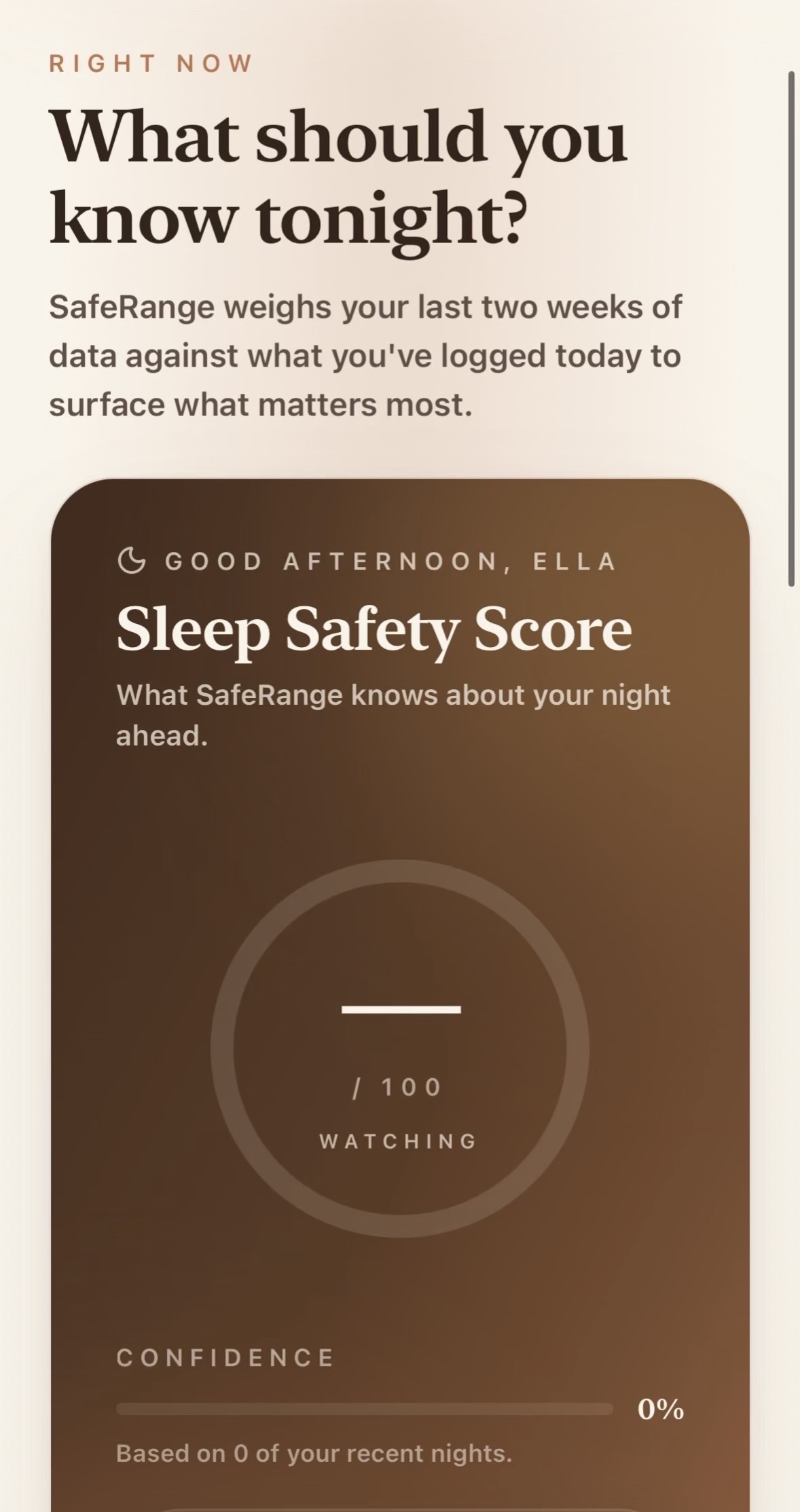
SafeRange transforms complex patterns, historical trends, and behavioral signals into a single understandable risk indicator. Rather than forcing users to interpret charts before bed, the experience provides a clear starting point for awareness, preparation, and peace of mind.
Many participants described going to bed uncertain about what might happen overnight. Fear often came not from data itself, but from not knowing what the data meant.
Translate multiple signals into one understandable nightly assessment supported by transparent explanations. Reduce interpretation effort without removing context.
Users receive a simple starting point for decision-making before bed, helping transform uncertainty into informed awareness.

“The goal wasn't to predict the future with certainty. The goal was to help people feel more prepared for it.”
“The most important insight wasn't a demand for more information. It was a desire for more meaning.”
Current tools are excellent at reporting events. They can show what happened. Few help users understand why it happened, what influenced it, or whether similar patterns are likely to occur again. This leaves people responsible for interpreting complex health data on their own.
Create a personalized explanation experience grounded in each person's own history. Every explanation should connect observations, contributing factors, and recurring behaviors using plain language rather than technical interpretation.
Instead of displaying isolated readings, SafeRange translates data into understandable narratives. Users gain context, confidence, and a clearer understanding of the patterns shaping their overnight experiences.
SafeRange does not replace human judgment. It helps people make sense of their own health story.
Success isn't the volume of data collected. It's whether people feel more informed, more prepared, and more in control.
SafeRange is more than a mobile app. Over time, it could grow into a broader health ecosystem that works alongside wearable and glucose-monitoring technologies to offer more proactive, personalized support.
The long-term opportunity isn't collecting more data. It's helping people better understand their health, reduce uncertainty, and make more informed decisions.
Interested in digital health, healthcare innovation, or research-driven product design? I'd love to connect.
A digital health product concept exploring explainable, predictive overnight glucose insights.
Digital Health Product Designer · Research-Driven Product Design · Open to opportunities and collaborations